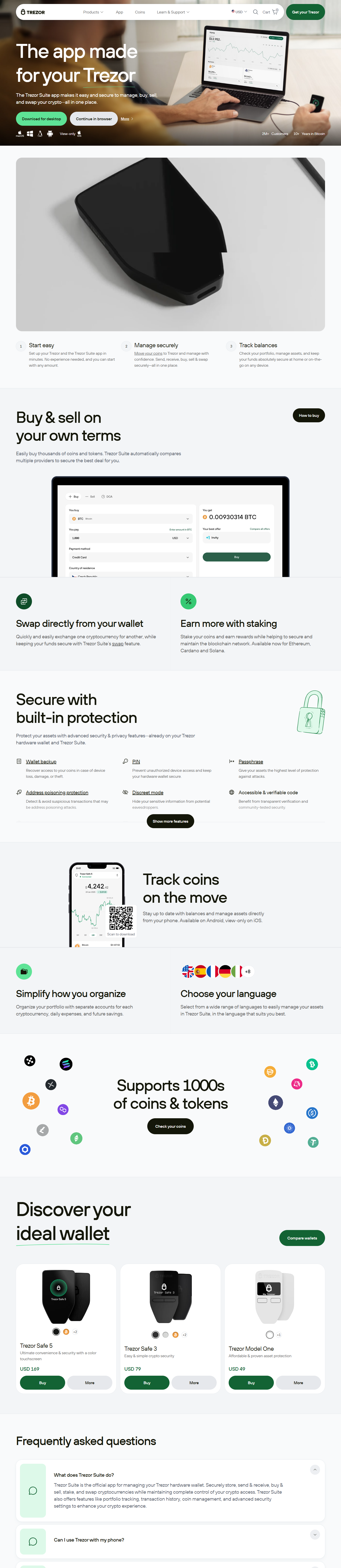
Trezor Login – Secure Access to Your Cryptocurrency Wallet
The Trezor Login authentication process is an advanced security mechanism that allows users to securely access their cryptocurrency funds using a hardware wallet rather than a conventional online password system. Private keys remain on the physical device and never touch the internet, making Trezor Login one of the most secure login frameworks in the world of digital asset protection. By using hardware-based encryption and physical device verification, Trezor Login ensures that only the true owner of the hardware wallet has the rightful ability to approve transactions, unlock wallets, and interact with blockchain networks. This system protects against phishing attacks, malware infiltration, and remote hacking attempts that typically exploit digital credential vulnerabilities.
How Trezor Login Works
The process starts when the user connects their Trezor hardware wallet using USB or compatible connection. The Trezor Suite initiates an encrypted channel with the device and requests verification. Instead of typing passwords or recovery phrases on a computer, the user confirms actions directly on the hardware device. The private keys are stored exclusively inside the Trezor device, isolated from internet-exposed environments where hackers commonly attempt to steal information. Since authentication happens internally inside the secure hardware chip, any malicious software running on the computer cannot intercept or falsify transaction approvals. This ensures a trustless environment where final authorization is always made physically by the device owner.
Even more, Trezor Login supports multi-currency and multi-account usage on the same device. Users can manage Bitcoin, Ethereum, ERC-20 tokens, and hundreds of supported assets without sacrificing security. Each login or action requires user confirmation, preventing unauthorized transfers even if a computer system has been compromised.
Benefits of Trezor Login
One of the main benefits is protection against identity-based attacks. Traditional logins can be breached through leaked passwords, stolen credentials, compromised API keys, or cloud-stored authentication tokens. With Trezor Login, no password exists, no identifying string is stored, and no server-side login repository can be breached. The security of access derives solely from physical device ownership. Another key benefit is that Trezor Login is inherently resistant to remote authorization fraud. Hackers cannot approve transactions without pressing buttons or entering PIN or passphrase on the device itself.
Trezor Login also reduces cognitive load and user-error risk. Users no longer need to invent complex passwords or remember multiple login identities. The Trezor device becomes the master identity tool, functioning as the cryptographic signature instrument for blockchain authentication. Authentication is not a matter of remembering and typing — it is a matter of physically verifying and approving.
Best Practices for Secure Use
To ensure optimal protection while using Trezor Login, users should always verify they are interacting with the official Trezor Suite or legitimate integrated service. They should never type their recovery seed into any digital field or online form. The recovery seed belongs only physically written down and stored in a secured offline environment. If advanced security is desired, users can enable passphrase protection, which creates an additional hidden wallet layer. Combining a passphrase with Trezor Login results in dual-factor hardware-level authentication which is nearly impossible to break. Firmware should always be updated through the official Trezor interface to ensure the latest cryptographic defenses.
Furthermore, users should physically secure the device itself. Losing a Trezor device does not automatically result in asset loss, but it increases risk. With passphrase + PIN security, even a stolen device cannot be accessed. However, users must avoid storing recovery seeds near the device to eliminate combined theft risk.
The Future of Digital Authentication
Trezor Login represents a next-generation evolution in access security for blockchain ecosystems. As decentralized applications and Web3 environments continue to expand, secure authentication will become increasingly critical. Passwords and server-centralized access systems will fade away in favor of cryptographic identity models based on offline hardware. Trezor Login stands at the forefront of this shift, empowering users with true digital autonomy and sovereign ownership of their cryptographic identities. Instead of trusting third-party authentication services, individuals control their login authority directly.
With Trezor Login, the concept of “not your keys, not your crypto” evolves into “only your device unlocks your crypto.” This shift ensures that individuals retain ultimate ownership and authentication rights over digital assets in a rapidly changing technological landscape.